Claude gets most things right. But when it's wrong, it can sound just as sure of itself as when it's right. That's the part that catches people out.
You don't need to distrust everything. You need to know where mistakes hide and have a few quick checks.
Where mistakes hide
- Specific facts: dates, prices, phone numbers, laws, tax rules, and anything that changes year to year.
- Numbers it worked out: totals, percentages and averages, especially from messy files.
- Gaps it filled: a name, date or detail you didn't give it, so it guessed.
- Things that sound official: a rule, a regulation or a quote that nobody actually said.
Step 1: Ask Claude to check its own answer
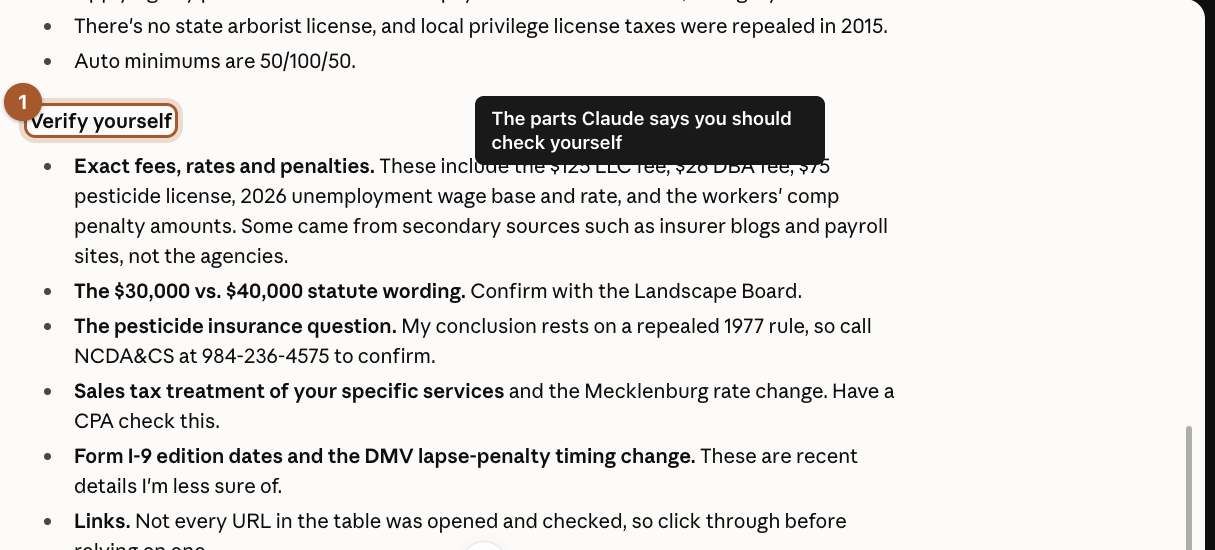
After any answer you're going to rely on, send this in the same chat:
Double-check your answer above. Tell me which parts you're confident about, which parts I should verify myself, and anything you assumed that I didn't tell you.
Step 2: Ask where a fact came from
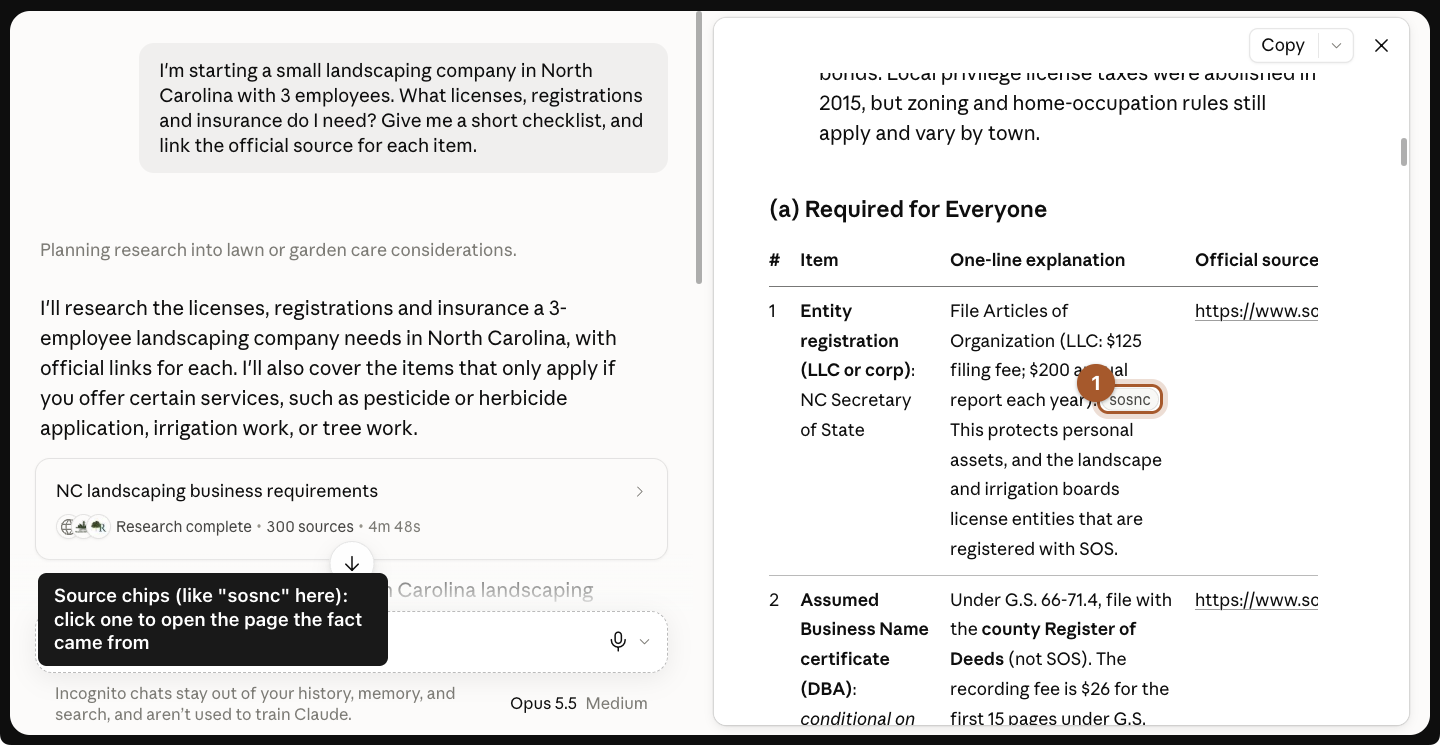
For facts that matter, like a license requirement or a tax rule, ask for the source:
Where does that come from? Give me a link to the official source so I can check it.
Then click the link and make sure the page actually says what Claude said. If Claude can't point to a real source, treat the fact as unconfirmed. The research guide shows how to get sources from the start.
Step 3: Spot-check one number
When Claude adds up a spreadsheet or works out a percentage, check one number yourself with a calculator. If that one is right, the rest usually are. If it's wrong, tell Claude and ask it to redo the math, showing its work.
Step 4: Tell it not to guess
Add this line to any request where made-up details would hurt, or put it in your Project instructions so it's always there:
If you're not sure about a fact, a price, a name or a date, say so and ask me instead of guessing.
Step 5: Use the 30-second check before anything leaves the building
Before you send an email, post, quote or letter that Claude drafted, read it once for these four things:
- Names: is every name spelled right, and is it the right person?
- Numbers: prices, dates, times and amounts.
- Promises: is it committing you to anything you didn't agree to?
- Placeholders: any leftover [brackets] Claude added for you to fill in.
Screenshots taken September 24, 2026. Claude changes its look now and then. If a button has moved, look for the same words nearby.